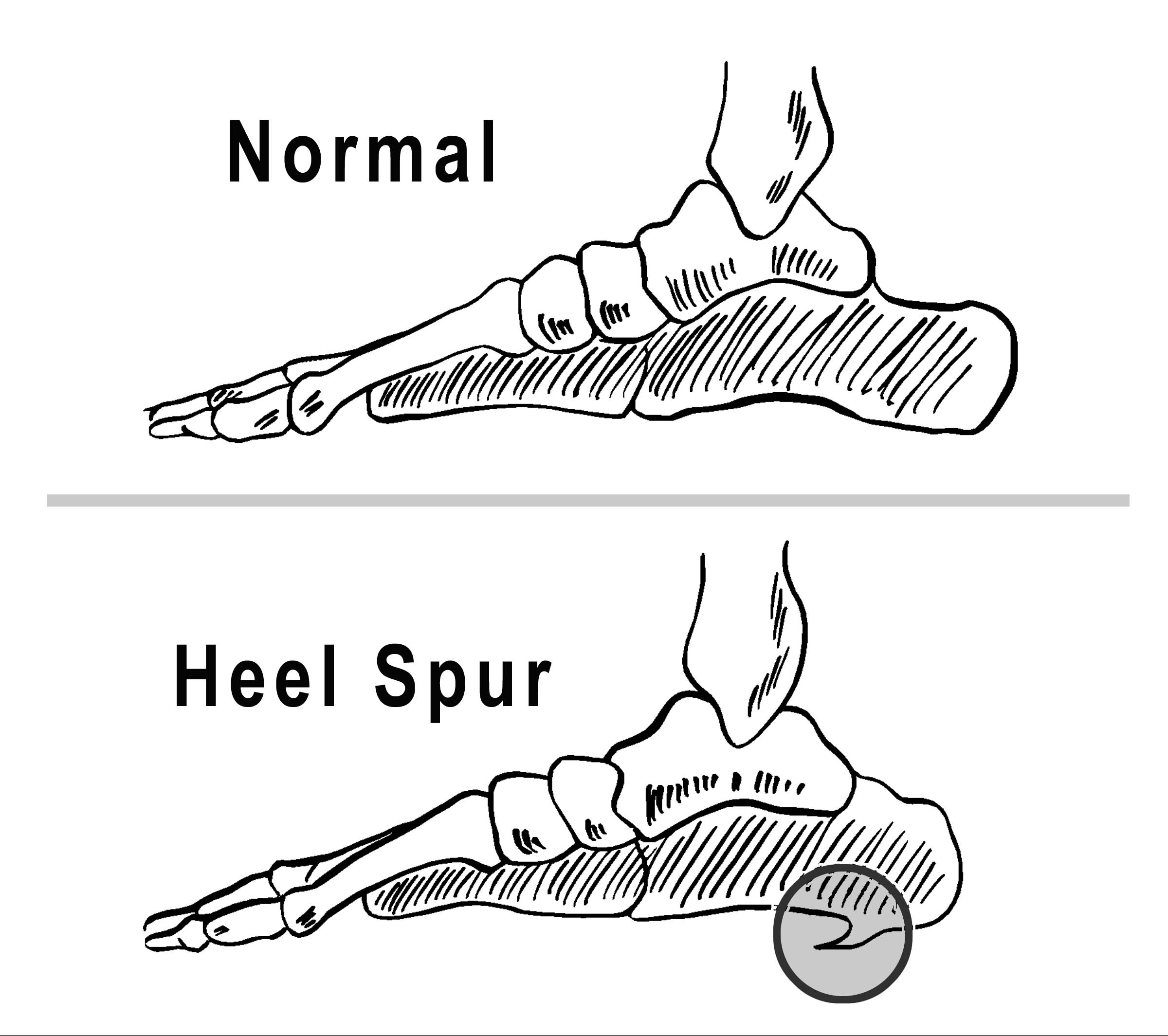
Patients in podiatry offices across America frequently complain of morning pain that is sharp and searing in the bottom of the heel–stretching to the arch of the foot. This is not limited to the feet but can also cause pain in the back or neck when you first start to move around in the morning In fact, the medical term for heel pain, Poststatic Dyskinesia, www.footcare4u.com/category/foot-ailments-treatments/common-foot-ailments/bursitis/ means “pain after rest.” It can also occur upon standing, after resting or sitting for a while, anytime during the day. Some patients state that they get this pain upon getting out of their car after driving for a while .
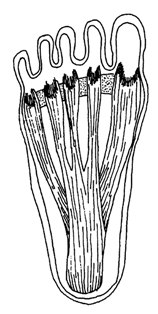
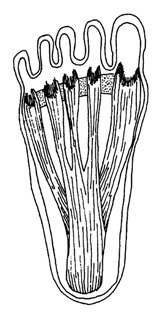
/Poststatic Dyskinesia is most commonly caused by a Plantar Fasciitis. The plantar fascia is a thick ligament made from fibrous connective tissue attached from the heel to the ball of the foot, extending into the base of the toes. When the foot impacts the ground with each step, the foot flattens out, lengthening the foot. This action pulls on the plantar fascia, which stretches slightly and functions as a shock absorber. The ligament’s tension is released when the heel comes off the ground.
When the plantar fascia stretches excessively, due to a variety of actions such as rigorous exercise, plantar fasciitis may develop. One cause of this is excessive pronation of the foot during walking and standing, which strains the plantar fascia. Panama City, Florida podiatrist Dr. Burton S. Schuler claims that excessive pronation can be caused by a short first metatarsal bone, also known as Morton’s Toe. The foot does not absorb the shock of hitting the ground properly, resulting in strain on the plantar fascia. This leads to plantar fasciitis and post-static dyskinesia
When a person rests their feet, such as overnight while sleeping, the plantar fascia is mending itself from the wear and tear of the day. Then with the first few steps in the morning, the plantar fascia becomes torn again. This is why Poststatic Dyskinesia tend is worse the first few steps in the morning or after rest when the feet are relaxed and free of strain. This burden can be avoided if you have Morton’s Toe and decide to follow the simple treatment regimen of a toe pad that can lead to a pain-free morning
WHAT IS A MORTON’S TOE OR LONG SECOND TOE
In the 1920’s and 1930”s Dr. Dudley J. Morton of Yale Medical School and Columbia Medical School wrote that a problem with the 1st metatarsal bone, known as a Morton’s Toe could be the reason for most foot problems. Dr. Janet Travel, White House physician to Presidents Kennedy and Johnson, and Professor Emeritus of Medicine at George Washington University took this concept further by writing and teaching that the Morton’s Toe could cause pain all over your body. She wrote and taught for four decades that a Morton’s Toe could cause back, hip, knee, leg foot and ankles problems. She felt that the Morton’s Toe, was so important that at the age of 89 she made a video tape to teach other physicians about how to recognize it and how to treat it.
WHAT IS WHY YOU REALLY HURT: IT ALL STARTS IN THE FOOT
Why You Really Hurt: It All Starts in the Foot, tells the story of two these famous physicians and their association with the common, but painful, medical condition known as the Morton’s Toe. Millions of people suffer everyday with chronic aches and pains from head to toe and don’t know why. Many of them have lost all hope, and believe they will have to live with these pains for the rest of their lives. The book is significant because for the first time in seventy years the public is made aware of the importance of the Morton’s Toe, and the fact that could be the real unidentified reason (the “medical missing link”) for their unending torments. This book will also show how Morton’s Toe can also cause fibromyalgia, arthritis, sleep disturbances (RLS), temporomandibular joint pain, and numerous other problems through out the body The good news is that all of these problems can be treated with a simple pad that costs about two to three dollars. The bad news is that in spite of the fact that two of the most famous doctors of the twentieth century were behind the Morton’s Toe, most modern day physicians are not aware of Morton’s Toe or of it ability of causing pain all over the body. This book took six years to research and write, but Dr. Schuler feels it was worth it because it should be able to help many people get out of pain. The book is disturbed national by the Cardinal Publishing Group. It will be translated to Greek this Year.
This article about plantar fasciitis appeared international several months ago
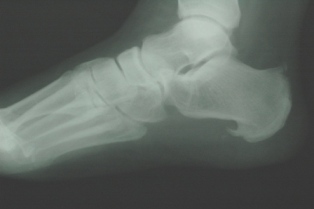
The plantar fascia is a fibrous, thick cord-like tissue that originates off the calcaneus or heel bone and fans out to attach to the surfaces of the foot bones (otherwise known as the arch of the foot). Plantar fasciitis is a painful inflammation of the plantar fascia, and it is stubbornly resistant to traditional treatments, including corticosteroid injections, anti-inflammatory medications, physical therapy, orthotics, and surgery. One podiatrist, Dr. Burton Schuler of Panama City, Florida, argues that it is difficult to treat since one major cause is frequently overlooked: a short first metatarsal bone (or Morton’s Toe) . This is the subject of his recent book, Why You Really Hurt: It All Starts in the Foot, which details how a short first metatarsal bone can cause a range of physical ailments.
Morton’s Toe throws off the foot’s normal pronation, and this can result in inflammation of the plantar fascia ). A Morton’s Toe can cause Plantar Fasciitis because the foot will be unstable when it needs to be stable, compensating for the instability by abnormally pronating. Dr. Schuler’s commonly prescribed treatment, after 36 years of diagnosing Morton’s Toe and plantar fasciitis, is a common toe pad under the first big toe of each affected foot. This pad realigns the foot from abnormal pronation
Schuler warns that a toe pad should be tried if one has Morton’s Toe and plantar fasciitis before one tries more complicated treatments such as injections or even surgery. A recent study by Stephen Barrett, DPM and Susan Erredge, DPM, looked at various plantar fasciitis treatments. They observed that injections of platelet concentrations (platelet-rich plasma) effective in the treatment of the disorder known as plantar fasciitis (http://www.prlog.org/11178891-chronic-plantar-fasciitis-treated-with-platelet-rich-plasma.html).
About the Author: Dr. Burton S. Schuler foot doctor, foot specialist, podiatrist of Panama City, Fl and the director of the Ambulatory Foot Clinics Podiatric Pain Management Center. He , graduated from the N. Y. College of Podiatric Medicine in 1975 at the age of twenty-four, and has been in private practice ever since; and is a leading authority on the Morton’s Toe, Long Second Toe and it associated problems. He is the author of the newly published book about The Morton’s Toe, Why You Really Hurt: It All Starts In the Foot and is the story of how one bone in your foot could be the real reason for pains thru out your whole body. It is important because it offer the public new information about why millions of people suffer everyday with aches and pains, and offers new hope to get rid of problems they believed they would have to live with forever. It literally can be the “medical missing link”
Heel and arch pain are one of the most common complaints heard by American podiatrists, and there are many causes for these foot pain. Heel pain symptoms occur in the back or the bottom of the heel, and it usually occurs upon awakening and it intensifies throughout the day, causing difficulty walking. The two most common causes of heel pain are plantar fasciitis and heel spurs. https://www.footcare4u.com/category/plantar-fasciitis/
Plantar fasciitis is the most common cause of heel pain on the foot bottom. It is an inflammation in the plantar fascia, which is the tissue band that connects the heel to the ball of the foot. Plantar fasciitis can best be characterized as a sharp pain on the inside bottom of the heel. It is reported to be worse after restful periods–such as in the morning. Stress and degeneration of the plantar fascia are exacerbated by standing on the feet Heel spurs, or bones that grow on the heel’s bottom, are related to plantar fasciitis. They are another common cause of heel pain and are formed in response to the tension caused by tight plantar fascia.
Stating that plantar fasciitis and heel spurs are linked to tension in the plantar fascia is not explaining potential causes. Simply standing for lengthy periods on your feet is not an adequate explanation for why heel pain exists because not everyone experiences the same amount of pain if they stand on their feet. One explanation is offered by Dr. Burton S. Schuler, who is a practicing podiatrist in Panama City, Florida, and a Diplomate of the American Academy of Pain Management, a Diplomate of the National Board of Podiatric Examiners, and a Fellow of the American Academy of Ambulatory Foot Surgery . Research on the impact of a short first metatarsal bone, also known as Morton’s Toe, that dates back more than 80 years, reveals that this is a major cause in heel pain.
In Why You Really Hurt: It All Starts in the Foot, Schuler ties Morton’s Toe to plantar fasciitis and heel spurs through the phenomenon of pronation. Normal pronation is described as occurring when the outside part of the heel makes initial contact with the ground. The foot “rolls” inward about fifteen percent, comes in complete contact with the ground, and can support your body weight without any problem. The rolling in of the foot optimally distributes the forces of impact. This movement is called “pronation,” and it’s critical to proper shock absorption. At the end of the gait cycle, you push off evenly from the front of the foot (http://www.runnersworld.com/article/0,7120,s6-240-319-327-7727-0,00.html).
When your first toe is shorter than your first, your foot undergoes abnormal pronation; that is, the force of the impact when the foot hits the ground is not evenly distributed, causing improper shock absorption. The uneven distribution of pressure on the foot includes pressure on the heel–causing heel spurs–and the plantar fascia . Diagnosing and treating your Morton’s Toe is the first step in treating your chronic heel pain
This article appeared worldwide in February of 2011
If you have corns or experience a burning sensation in your foot, it is likely that this can be caused by a general medical problem referred to as “metatarsalgia.” This term is best described as an “umbrella term” for foot pain. Metatarsalgia symptoms may include: pain in the foot; pain that intensifies when walking or running; pain that is higher when walking on hard surfaces; numbness or tingling sensations in the toes; pain when walking barefoot (http://health.ezinemark.com/is-it-corns-or-metatarsalgia-31c88a37500.html).
In Why You Really Hurt: It All Starts in the Foot, the author, Dr. Burton S. Schuler, explains that common foot problems–many included in the general term metatarsalgia– are caused by Morton’s Toe, or a short first metatarsal bone, including burning, aching and throbbing on the balls of the feet. This throbbing takes place because when you have a Morton’s Toe, abnormal stress is applied to the ball of the foot (http://whyyoureallyhurt.com/mortons-toe/burning/). When this happens, the second through fifth metatarsal bones push down in an unusual manner against the ground. The result is injury to skin, nerves, muscles, and bursas at the ball of the foot. This is why the ball of the foot can burn, ache, hurt, and throb.
It is not usual for these burning discomforts to start on the balls of the feet and then spread into the toes or up the legs. Many patients have these leg problems, and it disturbs their sleep. Dr. Schuler reminds us that the physician who first wrote about Morton’s Toe, Dr. Dudley J. Morton, said these night “spasms” occur when foot and leg muscles are strained.
The first paper on Morton’s Toe by Dr. Dudley J. Morton appeared in 1927, in the prestigious Journal of Bone and Joint Surgery (http://whyyoureallyhurt.com/mortons-toe/dr-dudley-j-morton/). The paper presented Morton’s theory about how a short first metatarsal bone has harmful effects on the foot. Another paper published in the same journal in 1928 described, for the first time, another condition of the first metatarsal bone known as “Hypermobility of the First Metatarsal Bone”. In these papers, Morton describes how a longer second toe can cause pain in the feet and legs, and throughout the body.
As with many other problems caused by Morton’s Toe, metatarsalgia–burning, aches, and pains on the ball of the foot–can be treated with a simple little Toe Pad that can realign the whole front part of the foot and allow it to work properly (http://whyyoureallyhurt.com/home/#tp).
According to the American Academy of Orthopedic Surgeons website, every mile you walk puts 60 tons of stress on each foot (http://orthoinfo.aaos.org/topic.cfm?topic=a00159#Diagnosis). If you pound your feet on hard surfaces playing sports or wearing ill-fitting shoes, you may develop heel pain. The pain can worsen if people persist in performing activities that caused their original heel pain. When you continue to walk or exercise on a sore heel, it can become a chronic condition leading to more problems. A sore heel will usually get better on its own without surgery if you give it enough rest. But if you have other chronic foot conditions that cause or exacerbate heel pain, rest may not be enough treatment to eliminate the pain.
For example, some of us are born with a short first metatarsal bone (Morton’s Toe). Morton’s Toe is a chronic condition that will not go away (since this involves the length of your actual toe bones) so your heel pain can persist if you ignore your short first toes. Dr. Burton S. Schuler, author of Why You Really Hurt: It All Starts in the Foot, states that there is a strong connection between tor length and heel pain. He feels that this fact has been overlooked by most foot doctors and he invites them to verify the truth of this observation. If they did look for a Morton’s Toe, he feels “they would find one present the vast majority of time their patients appeared with heel or arch pain” ).
Scientifically, it makes sense that a short first toe can have an adverse effect on the foot’s pronation, as Schuler argues, causing heel pain. A certain amount of pronation is absolutely needed for the human foot to work properly because it allows the foot to become a “Bag of Bones” (loose), in order for it to act as a shock absorber as it adapts to all of the different walking surfaces we are on. This adaption (pronation) is only supposed take place for a split second. When it goes on longer than that split second is when we start to have a condition known as Abnormal Pronation (https://www.footcare4u.com/category/abnormal-pronation/). And, as Schuler argues after treating foot problems for more than thirty years, it is abnormal pronation that can be the cause of chronic heel pain. But it can be treated with a simple toe pad
Video Clip: Click to Watch video explaining Morton’s Toe,
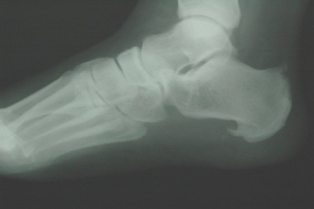
When you walk do you experience a painful sensation in the back part of your foot? If so, you may be suffering from heel spurs, which are abnormal bony growths in your feet. Although your heel bone has skin and fat layers that protect it from wear and tear, spurs form when there is extra pressure on the foot. The connective tissue connecting the heel to the toes gets affected, and a bony growth that presses against the heel and leads to heel spur pain will appear. This condition is common in those people who make excessive use of their feet such that there is added pressure applied to the heel.
But if simply being on your feet alot is what causes heel spurs, then wouldn’t every individual who makes excessive use of their feet have problems? Why do some people develop pain while others do not? According to Panama City podiatrist, Dr. Burton Schuler, who has treated many patients with heel spur pain, heel spurs form when there is an overpronation of the foot. One common condition that causes overpronation is called “Morton’s Toe,” Long Second Toe, and Schuler believes that the likelihood of suffering from heel, foot, or leg pain is much higher if you have a Morton’s Toehttp://whyyoureallyhurt.com/mortons-toe/heel-pain/).
A Morton’s Toe is caused by hypermobility of the first metatarsal bone, causing the second toe to be longer than the first toe. The condition is named after Dr. Dudley J. Morton, who first wrote about Morton’s Toe as early as 1928, linking it to a wide range of foot problems.
The most common reasons for heel spurs and heel pain is due to excessive stress and stains applied to the heel bone and the soft tissues structures that attach to the heel bone when we walk. This abnormal stress and strain is caused by Abnormal Pronation, which is the result of having a Morton’s Toe, Long Second Toe . Our modern-day society, where many jobs demand long hours of standing on hard concrete, that are unforgiving on our feet also contributes to heel problems. Over a period of years one of the major structures attached to the heel called the plantar fascia (this is the large rubber band structures that hold up your arch, and that goes from the heel to the ball of the foot) pulls away from the calcaneus (heel bone) and causes microscopic bleeding to occur. This bleeding can lead to ne4FB5UKWKUPXAw bone formation at the heel which eventfully leads to the formation of a bone spur. “Heel Spur Syndrome” is pain of the heel when the plantar fascia is just pulling abnormally at the heel without a spur being formed
While available medical information suggests numerous ways to treat heel spur pain, including surgery, exercise/ stretching, ice, pain creams, pain killers, special shoes and rest , Schuler maintains that simplest and most effective treatment is his toe pad, placed under the foot beneath the first metatarsal bone.
Here is a nice article from February 2011. Since the majority of Americans who suffer from foot problems suffer from heel pain, it is crucial to understand the common causes and treatments for this pernicious medical issue. One of the most common causes of heel pain is plantar Fascist’s, which is caused by the degradation of the plantar fascia, a fibrous ligament that is found at the bottom of the foot. This degradation results from the inflammation that happens when people are on their feet most of the day.
While treatment for plantar fasciitis includes proper shoes, drugs, stretching exercises, and orthotics, you may find yourself trying all of these various treatments with little or no impact. Panama City, Florida podiatrist, Dr. Burton S. Schuler, believes that you should consider whether having a short first metatarsal bone (dubbed “Morton’s Toe” after Dr. Dudley J. Morton who wrote extensively about the condition) influences degradation of your plantar fascia–leading to the painful condition of plantar fasciitis . In his 36 years of practice, Schuler has seen evidence of a strong link between Morton’s Toe and plantar fasciitis.
The main issue causing pain in the heel when you have Morton’s Toe is the foot’s improper pronation. A Morton’s Toe will result in a lack of proper stabilization of the foot when it is needed. This instability is the major reason the foot will abnormally pronate and cause pain–including planar fasciitis pain.
How do you “treat” this? Surgery? Schuler states that a toe pad placed under the first big toe helps correct the foot’s pronation, which can relieve heel pain caused by plantar fasciitis (http://whyyoureallyhurt.com/home/#tp). There is also quite a large market for alternatives to plantar fasciitis surgery, including heel cups, supports, orthotics and shoes. No doubt, proper fitting shoes can also help relieve heel pain, but you should first check to see whether your foot hits the ground properly due to toe length and correct that problem.
About the Author: Dr. Burton S. Schuler foot doctor, foot specialist, podiatrist of Panama City, Fl and the director of the Ambulatory Foot Clinics Podiatric Pain Management Center and is a leading authority on the Morton’s Toe, Long Second Toe and it associated problems. He is the author of the newly published book about The Morton’s Toe, Why You Really Hurt: It All Starts In the Foot. The book is published by the La Luz Press, Inc and is disturbed national by the Cardinal Publishing Group. Why You Really Hurt: It All Starts In The Foot, is the story of how one bone in your foot could be the real reason for pains thru out your whole body. It is important because it offer the public new information about why millions of people suffer everyday with aches and pains, and offers new hope to get rid of problems they believed they would have to live with forever. It literally can be the “medical missing link”
Dr. Schuler, graduated from the N. Y. College of Podiatric Medicine in 1975 at the age of twenty-four, and has been in private practice ever since. In 1982, he published his first book, The Agony of De-Feet: A Podiatrist Guide to Foot Care. During his thirty-five year professional career, he has written for Collier’s Encylopedia and various podiatric journals and publications. He has been interviewed by The New York Times, First in Women, and other publications. Dr. Schuler has appeared on hundreds of radio and television programs both here and aboard. He is a Diplomate of the American Academy of Pain Management, and the National Board of Podiatric Examiners. Dr. Schuler is certified as a wound specialist from the American Board of Wound Management. His professional and civic accomplishments have earned his inclusion in the 1999-2002 Who’s Who in America (Marquis).
Did you know that your feet contain twenty five percent of your body’s bones, so when they become misaligned it can affect your entire body and its? Feet are an important part of our body because they are our foundation. Thus, damage to our feet can reduce our quality of life and our daily activities. Foot problems can cause knee, hip or low- back, shoulder, neck and even headache and stomachache problems. Emotional stress can also be a result of these problems; these may be in the form of adrenal stress, blood sugar, fatigue and a lot more. Our feet are of vital importance.
The centrality of the foot in overall health is the subject of Why You Really Hurt: It All Starts in the Foot by Dr. Burton S. Schuler. Schuler graduated from the New York College of Podiatric Medicine in 1975 at the age of twenty-four, and is a leading expert on Morton’s Toe –or short first metatarsal bone. He has practiced Podiatric Medicine, Pain Management and Foot Surgery in Panama City, Florida for 36 years.
There are numerous symptoms of sore feet, and Schuler argues that many of these symptoms can be caused by Morton’s Toe. These include: Achilles tendonitis, arthritis feet and toes, athlete’s foot, bunions, burning feet, cold feet, corns, diabetic feet, flat feet, foot bursitis, foot calluses, foot circulation, foot injuries, foot fractures, gout, hammertoes, heel fissures, heel pain, heel spurs, mallet toes, metatarsalgia, numb toes, peripheral neuropathy, plantar warts, , tingling toes, toenail problems, turf toe, and plantar fasciitis. Among all these foot conditions that cause sore feet, plantar fasciitis is the most common problem). http://www.FootCare4U.com
Plantar fasciitis involves inflammation of the plantar fascia, which is the tissue that runs the length of the foot and holds it together. Morton’s Toe can be a cause of this condition since a shorter first toe bone results in the foot hitting and rolling improperly (pronation) when walking. In his book, Schuler provides a detailed explanation of the relationship between Morton’s toe and other foot problems; he prescribes a simple $2 toe pad under each big toe to correct pronation. This is a good remedy that is both convenient and can have wide ranging impact on twenty five percent of your body’s bones!
A foot doctor, foot specialist (Podiatrist), of Panama City Fl, Dr. Burton S. Schuler is a leading expert on the medical condition known as the Morton’s Toe. He is the author of the new book about the Morton’s Toe (Long Second Toe), Why You Really Hurt: It All Starts In The Foot. He feels that knee pain is often caused by the Morton’s Toe. In fact, Schuler feel that the Morton’s Toe, (Long Second Toe) is among the most overlooked reasons for why one gets pain in and around the knee joint
Here is something about bunions written about 6 months ago
What are Bunions?
A simple bunion is an abnormal bump of bone that is formed at the head of the first metatarsal bone. The bunion can either be on the top or side of the first metatarsal bone. In a more advanced bunion deformity, called Hallux Abducto Valgus, there starts to be a movement of the big toe toward the second toe. The most severe bunion is when the first toe not only moves toward the second toe, but it overlaps or under laps the second toe.
If a simple bunion bump is formed, there is a good chance Mother Nature will step in and produce a shock absorber that will protect the bunion bump. This shock absorber is called a bursa. A bursa is a fluid-containing sac. With time and enough irritation, the sac (bursa) that is protecting the bunion can become swollen, inflamed, and sore. This problem is known as bursitis.
Bunions and the Morton’s Toe
Over the years, the one constant that I have seen with patients who have bunions is a short first metatarsal bone and/or hypermobility of the first metatarsal bone, (Morton’s Toe) due to inheritance. We know that Morton’s Toe, Long Second Toe. takes place at the first metatarsal bone, so it makes sense you will have a lot of abnormal stresses and strains at that area. Because of this, bunions can and do exist. But the reason for the bunions is due to pronation that is caused by the Morton’s Toe.
Also many times bunions are secondary to Flat Feet, that is caused by Morton’s Toe or the Long Second Toe
Morton’s Toe and Pronation: The reason we get bunions.
Hypermobilty at the first metatarsal bone is one of the two hallmarks of having a Morton’s Toe . It is this hypermobility that causes us to get bunions .
This is what happens: In a hypermobile foot there is excess motion cause by pronation. This pronation cause the first metatarsal bone to be unstable and move upwardly , turn inwardly and move inwardly. As the pronation gets worst because of an untreated Morton’s Toe, Long Second Toe, abnormal tension will be applied by the Adductor Hallicus muscle. This abnormal tension also cause the bunion to form by pulling th bunion joint abnormally apart. This stress can also cause arthritis to occur in the bunion joint it self.
A lot has been written about how shoes are a major cause of bunions. I can agree with that, but only up to a point. Believe it or not, at one time or another there are some people who insist on wearing shoes that are incorrect for them. Do all of these people have bunions or other foot problems? Of course not. The ones who end up getting foot problems are the ones born with the poor combination of having a short metatarsal bone, and/or hypermobility of the first metatarsal bone. The truth is, though, if you insist on constantly wearing shoes that are not right for you, then there is a strong likelihood that you not only will get bunions, but most of the other problems in my book, regardless of how normal your feet are. In any case, if your bunions don’t hurt leave them alone.
A bunion is an enlargement of the big toe bone and it joint. . This joint, which carries lots of weight, is stiff and sore, making even the wearing of shoes difficult or impossible Bunions form when the normal balance of forces that is exerted on the joints and foot’s tendons becomes disrupted–leading to foot deformity. They are brought about by years of abnormal motion and pressure over the big toe joint. It is acknowledged that bunions run in families. One theory advanced by Dr. Burton S. Schuler, a practicing podiatrist for over 36 years, Director of the Ambulatory Foot Clinic in Panama City, Florida, and author of Why You Really Hurt: It All Stars in the Foot, is that it is not necessarily bunions that are inherited but toe length, and toe stability which can lead to the development of bunions .
On inheritance and the foot, Schuler indicates that one of the most commonly inherited foot problems is a short first metatarsal bone (Long Second Toe) –also known as Morton’s Toe (https://www.footcare4u.com/category/the-wrong-kind-of-inheritance/). On one of his two websites (https://www.footcare4u.com), Schuler writes: “That is not to say that you are destined to inherit the same foot pathology your parents have, but in the process of inheriting a poor or weak foot, you open up a Pandora’s box that can eventually lead to any number of foot ailments…The Morton’s Toe is the problem most often inherited that causes foot problems.”
Isn’t a longer second toe merely a cosmetic problem, and how is this related to bunions? Morton’s Toe (short metatarsal bone or hypermobility of this bone) causes the foot to over-pronate, with weight unevenly distributed throughout the foot. This causes abnormal stress in that are where the bunion can eventually form as a response (https://www.footcare4u.com/category/bunions/). When a bunion bump forms, the foot may develop it’s own “shock absorber” to protect the bunion bump. This is called a “bursa,” which is a sac of fluid that can eventually become inflamed–developing bursitis.
Even if you switch shoes to accommodate bunions or bursitis in your foot, the problem will persist if you do not seek treatment for what could be the root cause of your problem: Morton’s Toe (http://whyyoureallyhurt.com/home/#tp).
WHAT IS A MORTON’S TOE OR LONG SECOND TOE
In the 1920’s and 1930”s Dr. Dudley J. Morton of Yale Medical School and Columbia Medical School wrote that a problem with the 1st metatarsal bone, known as a Morton’s Toe could be the reason for most foot problems. Dr. Janet Travel, White House physician to Presidents Kennedy and Johnson, and Professor Emeritus of Medicine at George Washington University took this concept further by writing and teaching that the Morton’s Toe could cause pain all over your body. She wrote and taught for four decades that a Morton’s Toe could cause back, hip, knee, leg foot and ankles problems. She felt that the Morton’s Toe, was so important that at the age of 89 she made a video tape to teach other physicians about how to recognize it and how to treat it.
Heel pain is one of the most common complaints that podiatrists hear about from their patients. Most heel pain is caused by plantar fasciitis; the plantar fascia is a very thick band of tissue that has a rubber-band like structure spanning the length of the foot. When it becomes irritated or inflamed, it can result in severe pain. (On x-rays, heel spurs are seen in people with and without plantar fasciitis.)
Plantar fasciitis is most common in the following: people who are between the ages of 40 and 60; women; people who conduct strenuous exercise; obese people; people who work on their feet; and people who wear improper shoeshttp://www.mayoclinic.com/health/plantar-fasciitis/DS00508/DSECTION=risk-factors). It is also common in people who have a short first toe bone (also known as Morton’s Toe), according to Dr. Burton Schuler, a Panama City, Fl podiatrist and author of Why You Really Hurt: It All Starts in the Foot http://www.whyyoureallyhurt.com).
Morton’s Toe has a great impact on the foot’s pronation. The website explains: “Pronation allows the shock of our body weight to be absorbed when the foot meets the ground. Pronation also makes it possible for the foot to adapt to all of the different surfaces we walk on. This adaption (pronation) is only supposed take a moment so the foot can slow down in order to adjust to its new walking surface”
There are new treatments for plantar fasciitis such as Radial Shock Wave Therapy (RSWT). RSWT is an FDA approved non-surgical method for reducing foot pain and getting you back on your feet. It sends shockwaves, also known as pressure or sound waves, through the skin and on to the targeted tissue. When shockwaves make contact with the inflamed tissue they stimulate your body’s natural self-healing process http://free-news-release.com/Plantar-Fasciitis–When-Your-Heel-Bone-Becomes-Your-Hell-Bone-Detail_86246.html). Clearly, if you have heel pain and do not have Morton’s Toe, then any number of treatments–such as RSWT– may be tried. Dr. Schuler prescribes to those with Morton’s Toe and plantar fasciitis a simple toe pad placed under the first toe of each foot; a much simpler and reportedly highly effective treatment.
About the Author: Dr. Burton S. Schuler foot doctor, foot specialist, podiatrist of Panama City, Fl and the director of the Ambulatory Foot Clinics Podiatric Pain Management Center and is a leading authority on the Morton’s Toe, Long Second Toe and it associated problems. He is the author of the newly published book about The Morton’s Toe, Why You Really Hurt: It All Starts In the Foot. The book is published by the La Luz Press, Inc and is disturbed national by the Cardinal Publishing Group. Why You Really Hurt: It All Starts In The Foot, is the story of how one bone in your foot could be the real reason for pains thru out your whole body. It is important because it offer the public new information about why millions of people suffer everyday with aches and pains, and offers new hope to get rid of problems they believed they would have to live with forever. It literally can be the “medical missing link”
Dr. Schuler, graduated from the N. Y. College of Podiatric Medicine in 1975 at the age of twenty-four, and has been in private practice ever since. In 1982, he published his first book, The Agony of De-Feet: A Podiatrist Guide to Foot Care. During his thirty-five year professional career, he has written for Collier’s Encyclopedia and various podiatric journals and publications. He has been interviewed by The New York Times, First in Women, and other publications. Dr. Schuler has appeared on hundreds of radio and television programs both here and aboard. He is a Diplomate of the American Academy of Pain Management, and the National Board of Podiatric Examiners. Dr. Schuler is certified as a wound specialist from the American Board of Wound Management. His professional and civic accomplishments have earned his inclusion in the 1999-2002 Who’s Who in America (Marquis).
I wrote this over 2 years ago but brought it up dated, on the bottom of the page with a very nice video explaining the Morton’s Toe That video has gotten about 45,000 viewing on you tube
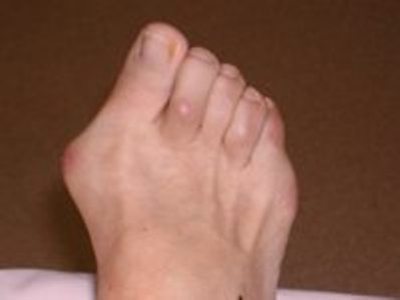
Advanced Bunion Deformity with Hammer Toes, Compliment office of Dr. Burton S. Schuler, Panama City Fl
A bunion is an enlargement of “the metatarsophalangeal (MTP) joint”; this is the big toe’s base joint that forms when the bone or tissue moves out of place. This forces the toe to bend toward the others, causing an often painful lump of bone on the foot. The MTP joint, which carries lots of weight, is stiff and sore, making even the wearing of shoes difficult or impossible. It also causes swelling of the feet to occur. Hammer toes are also associated with the formation of bunions.
Bunions form when the normal balance of forces that is exerted on the joints and foot’s tendons becomes disrupted–leading to foot deformity. They are brought about by years of abnormal motion and pressure over the MTP joint. It is acknowledged that bunions run in families. One theory advanced by Dr. Burton S. Schuler, a practicing podiatrist for over 38 years, Director of the Ambulatory Foot Clinic in Panama City, Florida, and author of Why You Really Hurt: It All Stars in the Foot, is that it is not necessarily bunions that are inherited but toe length, which can lead to the development of bunions
On inheritance and the foot, Schuler indicates that one of the most commonly inherited foot problems is a longer second toe–also known as Morton’s Toe . “That is not to say that you are destined to inherit the same foot pathology your parents have, but in the process of inheriting a poor or weak foot, you open up a Pandora’s box that can eventually lead to any number of foot ailments…The Morton’s Toe is the problem most often inherited that causes foot problems.”
Isn’t a longer second toe merely a cosmetic problem, and how is this related to bunions? Morton’s Toe (short metatarsal bone or hypermobility of this bone) causes the foot to over-pronate, with weight unevenly distrbuted throughout the foot. This causes abnormal stress in that are where the bunion can eventually form as a response . When a bunion bump forms, the foot may develop it’s own “shock absorber” to protect the bunion bump. This is called a “bursa,” which is a sac of fluid that can eventually become inflamed–developing bursitis.
Even if you switch shoes to accommodate bunions or bursitis in your foot, the problem will persist if you do not seek treatment for what could be the root cause of your problem: Morton’s Toe
About the Author: Dr. Burton S. Schuler foot doctor, foot care specialist, podiatrist of Panama City, Panama City Beach Fl , is a 1975 graduated of the New York College of Podiatric Medicine , and has been in private practice for over 38 years. He is an authority on the human foot and has written two books and hundreds of articles about the foot published in numerous podiatric journals publications and at www.FootCare4U.com. He is this country’s leading authority on the Morton’s Toe, ((Long Second Toe) and its associated medical and health problems and on the life of Dr. Dudley J. Morton,
His, first book about the Morton’s Toe, Why You Really Hurt: It All Starts in the Foot published in 2009 is the leading authority on the Morton’s Toe. and presently has over 7,000 copies in print, and sold has thousands of eBook copies ( Kindle) on Amazon. The book is published by the La Luz Press, Inc and is disturbed nationally by the Cardinal Publishing Group. Dr. Schuler’s next book about the Morton’s Toe, called the Morton’s Toe Book will be published in 2014 also by the La Luz Press.
In 1982, he published his first book, The Agony of De-Feet: A Podiatrist Guide to Foot Care. During his thirty eight year career, he has written for Collier’s Encyclopedia and has been interviewed by The New York Times, Cosmopolitan, and First in Women. Dr. Schuler has appeared on dozens of radio and television programs both here and aboard. He is a Diplomate of both the American Academy of Pain Management, and the National Board of Podiatric Examiners. Dr. Schuler is certified as a wound specialist from the American Academy of Wound Management. He has been a professional member of the American Diabetic Association for about 35 years. . His professional and civic accomplishments have earned his inclusion in the 1999-2002 Who’s Who in America (Marquis)
Many readers have probably heard of heel spurs, but they are not exactly sure what one is. The foot’s largest bone is the heel bone, and therefore it absorbs the most shock and pressure. The plantar fascia is a band of fibrous tissue on the bottom of the foot, running the entire expanse of the foot. A heel spur is an abnormal growth on the heel bone; when the plantar fascia pulls away from the heel, calcium deposits form, causing heel spurs. This can be an extremely painful condition, impairing your ability to walk properly (https://heelthatpain.com/heel-spur/treatment/).
In order to avoid a heel spur, one needs to avoid having the plantar fascia pull away from the heel. The blog “Healthy Happy Heels” is correct in stating that “…the stretching of the plantar fascia is usually the result of over-pronation…” (http://healthyhappyheels.blogspot.com/2010/12/what-is-heel-spur.html). But then we must ask, what causes over-pronation?
Dr. Dudley J. Morton, one of the leading researchers on feet in the twentieth century, warned about how a longer second toe (“Morton’s Toe”) can cause over-pronation of the foot. His predecessor, Panama City, Florida podiatrist Dr. Burton S. Schuler, explains: “If you have a Morton’s Toe the front part of the foot is unstable when it needs to be stable. Because of this, the foot will be forced to pronate. A pronating foot places abnormal stress on many areas of the foot, including the plantar fascia and the heel bone. It is this abnormal stress that is the start of all the heel problems noted above.
If a longer second toe is causing your painful heel problems, do not despair. The toe-pad that Schuler prescribes for Morton’s Toe (placed under the first toe of an over-pronating foot) can help heal those painful heels—as it already has in many cases.
About the Author: Dr. Burton S. Schuler foot doctor, foot specialist, podiatrist of Panama City, Fl and the director of the Ambulatory Foot Clinics Podiatric Pain Management Center and is a leading authority on the Morton’s Toe, Long Second Toe and it associated problems. He is the author of the newly published book about The Morton’s Toe, Why You Really Hurt: It All Starts In the Foot. The book is published by the La Luz Press, Inc and is disturbed national by the Cardinal Publishing Group. Why You Really Hurt: It All Starts In The Foot, is the story of how one bone in your foot could be the real reason for pains thru out your whole body. It is important because it offer the public new information about why millions of people suffer everyday with aches and pains, and offers new hope to get rid of problems they believed they would have to live with forever. It literally can be the “medical missing link”
Dr. Schuler, graduated from the N. Y. College of Podiatric Medicine in 1975 at the age of twenty-four, and has been in private practice ever since. In 1982, he published his first book, The Agony of De-Feet: A Podiatrist Guide to Foot Care. During his thirty-five year professional career, he has written for Collier’s Encyclopedia and various podiatric journals and publications. He has been interviewed by The New York Times, First in Women, and other publications. Dr. Schuler has appeared on hundreds of radio and television programs both here and aboard. He is a Diplomate of the American Academy of Pain Management, and the National Board of Podiatric Examiners. Dr. Schuler is certified as a wound specialist from the American Academy of Wound Management. His professional and civic accomplishments have earned his inclusion in the 1999-2002 Who’s Who in America (Marquis).
In just one day, December 1, 2010, sports media reported the performance of several athletes is affected by a condition called “plantar fasciitis.”
Plantar fasciitis is a swelling of the heel and or arch, and the most common type of pain on the bottom of the heel. It is caused by an ongoing injury at the place the plantar fascia attaches to the heel bone. This spot on the bone is called the medial tuberosity of the heel. If there is an abnormal pulling or tugging at this spot, because of the Morton’s Toe it can resulting in pain and inflammation occur at the plantar fascia. This pain and swelling of the feet is known as plantar fasciitis.
The condition is so common among basketball players that here is even a blog called “Plantar Fasciitis: A Basketball Blog as Volatile as the Injury Itself” (http://plantarfasciitis.eatstheuniverse.com/). But basketball players are not the only ones with the condition. The Press-Enterprise reports that San Diego Charger’s Antonio Gates has the same problem: “By Saturday, realized it was no use. He couldn’t run, he couldn’t cut, and trying to bluff his way through plantar fasciitis just wasn’t worth the drop-off in performance, regardless of the importance of Sunday’s game against Kansas City” (http://www.pe.com/sports/breakout/stories/PE_Sports_Local_D_chargers_notes_13.4042d02.html).
Team doctors may be scrambling to find quick fixes for plantar fasciitis, so that the athletes can get back on the court or field as soon as possible. At least one podiatrist, Dr. Burton S. Schuler of Panama City, Florida, would encourage team docs to find out if these athletes have a second toe that is longer than the first (also known as “Morton’s Toe”). His reasoning? In his 36 years as a podiatrist, plantar fasciitis is usually caused by abnormal pronation of the foot due to Morton’s Toe
Here is a video about plantar fasciitis made by Dr. Burton S. Schuler on YouTube
Sports fans everywhere, take note: if your favorite athlete is sitting on the bench due to heel pain, and he has a longer second toe, he needs to correct the pronation of his foot with a simple toe pad
WHAT IS A MORTON’S TOE OR LONG SECOND TOE
In the 1920’s and 1930”s Dr. Dudley J. Morton of Yale Medical School and Columbia Medical School wrote that a problem with the 1st metatarsal bone, known as a Morton’s Toe could be the reason for most foot problems. Dr. Janet Travel, White House physician to Presidents Kennedy and Johnson, and Professor Emeritus of Medicine at George Washington University took this concept further by writing and teaching that the Morton’s Toe could cause pain all over your body. She wrote and taught for four decades that a Morton’s Toe could cause back, hip, knee, leg foot and ankles problems. She felt that the Morton’s Toe, was so important that at the age of 89 she made a video tape to teach other physicians about how to recognize it and how to treat it.
Dr. Burton S. Schuler https://www.footcare4u.com/category/about-dr-schuler/ is a foot doctor, foot specialist (Podiatrist), of Panama City, Fl and the director of the Ambulatory Foot Clinics Podiatric Pain Management Center. He is also the author of the new book Why You Really Hurt: It All Starts In The Foot
Here is something I wrote for the national press about RLS
Take a long hot bath. Have a hot cup of milk or herbal tea. Listen to mood music. Pop an Ambien. Try yoga or massage. Turn off your television and phone early. Don’t think about work. Millions of Americans report that they are unable to sleep at night due to some sleep disturbances, and cures for insomnia are a dime a dozen from the pharmaceutical industries to holistic health treatments. According to the Mayo Clinic, how much sleep is enough varies from person to person. Most adults need seven to eight hours a night. More than one-third of adults have insomnia at some time, while 10 to 15 percent report long-term (chronic) insomnia (http://www.mayoclinic.com/health/insomnia/DS00187).
Many sleepless nights are caused by night cramps and restless leg syndrome (RLS). RLS is said to effect 9 million people in the United States, and there is a drug available, called Requip, that is used for Parkinson’s Disease and is also available to treat RLS (http://restless-legs-syndrome.emedtv.com/restless-legs-syndrome/requip-and-restless-legs-syndrome.html). RLS includes sensations such as burning, creeping, tugging, or a feeling of insects crawling inside the legs ranging in severity from uncomfortable, to irritating to painful. Night cramps can be equally problematic, and they are attributed to many causes such as: dehydration, muscle overexertion, or reactions to drugs. Unfortunately, there are side effects that accompany the drugs such as nausea and vomiting, perhaps leading you to consider treating RLS another way besides medication.
What if someone told you that your RLS could be a symptom of your toe length?
In The Human Foot, Dr. Dudley J. Morton first described how hypermobility of the first metatarsal bone (due to an elongated second metatarsal bone) is a major cause of strain on the foot and should be considered as a possible factor in any medical diagnosis involving pain–especially in the feet and legs (http://whyyoureallyhurt.com/#djm).
This is a very different approach to RLS then medicine, because treating the longer second toe problem (with a toe pad under the first toe, according to Moron’s Toe expert Dr. Burton Schuler, a graduate of New York College of Podiatric Medicine) gets to the root of the problem (http://whyyoureallyhurt.com/home/#tp).
The Mayo Clinic website defines bone spurs as bony projections that develop along the edges of bones, rubbing against nearby nerves and bones, causing pain. They usually form where bones meet each other — in your joints. But, they can also be found where ligaments and tendons connect with bone. Most bone spurs cause no symptoms and may go undetected for years. What treatment, if any, that you receive for your bone spurs depends on where they’re located and how they affect your health http://www.mayoclinic.com/health/bone-spurs/DS00627also).
Many readers have probably heard of heel spurs, but they are not exactly sure what one is. The foot’s largest bone is the heel bone, and therefore it absorbs the most shock and pressure. The plantar fascia is a band of fibrous tissue on the bottom of the foot, running the entire expanse of the foot. A heel spur is an abnormal growth on the heel bone; when the plantar fascia pulls away from the heel, calcium deposits form, causing heel spurs. This can be an extremely painful condition, impairing your ability to walk In order to avoid a heel spur, one need to avoid having the plantar fascia pull away from the heel. Dr. Burton S. Schuler, podiatrist of Panama City Fl” is correct in stating that “…the stretching of the plantar fascia is usually the result of over-pronation. ww w. Footcare4u.com But then we must ask, what causes over-pronation?
Dr. Dudley J. Morton, one of the leading researchers on feet in the twentieth century, warned about how a short first metatarsal bone (“Morton’s Toe”) (Long Second Toe) can cause over-pronation of the foot. Dr Schuler, explains: “If you have a Morton’s Toe the front part of the foot is unstable when it needs to be stable. Because of this, the foot will be forced to pronate. A pronating foot places abnormal stress on many areas of the foot, including the plantar fascia and the heel bone. It is this abnormal stress that is the start of all the heel problems noted above” (http: www.whyyouhurt.com).
If a longer second toe is causing your painful heel problems, do not despair. The toe-pad that Schuler prescribes for Morton’s Toe (placed under the first toe of an over-pronating foot) can help heal those painful heels—as it already has in many cases.
Dr. Burton S. Schuler is a foot doctor, foot specialist (Podiatrist), of Panama City, Fl and the director of the Ambulatory Foot Clinics Podiatric Pain Management Center. He is also the author of the new book Why You Really Hurt: It All Starts In The Foot
There are many different theories about what causes the widespread condition known as “Fibromyalgia”—from your toe length to psychological stress in the workplace. According to the Mayo Clinic, “Fibromyalgia is a chronic condition characterized by widespread pain in your muscles, ligaments and tendons, as well as fatigue and multiple tender points — places on your body where slight pressure causes pain” ). Two percent of Americans suffer from the condition, and women are much more likely to develop the disorder than men. Fibromyalgia symptoms often begin after a physical or emotional trauma, but in many cases there appears to be no specific triggering event.
Physical constitution as a cause of fibromyalgia is one theory advanced by podiatrist Dr. Burton S. Schuler, author of Why You Really Hurt: It All Starts in the Foot ). After seeing countless patients in his Panama City, Florida office, who are diagnosed with fibromyalgia and also have a short first metatarsal bone (Morton”s Toe), Dr. Schuler recommends treating your short toe bone with a simple toe pad to help reduce stress to the foot that can reverberate throughout the body http://whyyoureallyhurt.com/home/#tp). Since many of these same patients are also women, Dr. Schuler also recommends foregoing heels and other uncomfortable footwear in favor of shoes that accommodate natural foot structure. Dr Schuler is also a Diplomate of online ruletti the Academy of Pain Management for the past 20 years.
Another reason given for fibromyalgia diagnosis is workplace bullying. Emotional trauma abounds in the workplace. A recent study conducted by the Workplace Bullying Institute suggests a strong connection between those suffering from workplace bullying and the diagnosis of fibromyalgia. .
The Workplace Bullying Institute website states that “Stressors, aspects of the work environment and the behavior of people working there, can generate stress. Stress is a biological human response. It is physiological and real, not just imagined. Low-level stress may be necessary to compel people to act. However, severe stress, which prevents rational, controlled action, has overwhelmingly negative consequences http://www.workplacebullying.org/targets/impact/physical-harm.html).
Given the range of possible causes for fibromyalgia, it is best to cover all of your bases upon diagnosis through consideration of both physical problems—such as Morton”s Toe—and psychological stress, which ultimately has great impact on the body.
According to a recent survey of physicians who treat fibromyalgia patients, these patients face an uphill battle having their condition taken seriously (http://www.fmaware.org/site/PageServer?pagename=fibromyalgia). This is because Fibromyalgia, which has also been referred to as fibromyalgia syndrome, fibromyositis and fibrositis, is characterized by chronic widespread pain, multiple tender points, abnormal pain processing, sleep disturbances, fatigue and often psychological distress. For those with severe symptoms, fibromyalgia can be extremely debilitating and interfere with basic daily activities.
The study surveys 189 general practitioners (GPs) and 139 specialists, summarizing doctors stated reasons for their negative views toward fibromyalgia: “Twenty-three percent of general practitioners and 12 percent of specialists characterized fibromyalgia patients as malingerers” (http://www.fmnetnews.com/basics-news-perceptions1210.php). These statistics validate what many fibromyalgia patients already knew; they experience biased attitudes in the doctor’s office and it is difficult to get proper diagnosis and treatment when these attitudes are so widespread.
Thankfully, there are physicians out there who are willing to take seriously fibromyagia complaints (http://whyyoureallyhurt.com/mortons-toe/fibromyalgia/). One such doctor is Panama City, Florida podiatrist and author, Dr. Burton S. Schuler, who has written on how a short metatarsal bone (Morton’s Toe) Long Second Toe can affect pain throughout the body–including fibromyalgia pain.
Dr. Schuler draws from medical research by Dr. Janet Travell, a White House physician to both Presidents Kennedy and Johnson, who studied “myofascial pain,” (muscle pain anywhere in the body). This is quite similar to fibromyalgia. Both doctors Travell and Schuler acknowledge a connection between these myofascial/ fibromyalgia pain and Morton’s Toe–or short first metatarsal bone (http://whyyoureallyhurt.com/resources/dr-janet-travell/). The first toe bone’s length has a great impact on physical pain because if the foot pronates improperly, you can have pain throughout your body. Dr. Schuler writes that many of his podiatry patients who are diagnosed with “Fibro” and have Morton’s Toe respond positively to his toe pad treatment: a simple pad taped beneath the big toe of each foot.
In the 1920’s and 1930”s Dr. Dudley J. Morton of Yale Medical School and Columbia Medical School wrote that a problem with the 1st metatarsal bone, known as a Morton’s Toe could be the reason for most foot problems. Dr. Janet Travel, White House physician to Presidents Kennedy and Johnson, and Professor Emeritus of Medicine at George Washington University took this concept further by writing and teaching that the Morton’s Toe could cause pain all over your body including being a cause of fibro. She wrote and taught for four decades that a “Morton’s Toe could cause, back, hip, knee, leg foot and ankles problems. She felt that the Morton’s Toe, was so important that at the age of 89 she made a video tape to teach other physicians about how to recognize it and how to treat it.
Why You Really Hurt: It All Starts in the Foot, tells the story of these two famous physicians and their association with the common, but painful, medical condition known as the Morton’s Toe. Millions of people suffer everyday with chronic aches and pains from head to toe and don’t know why. Many of them have lost all hope, and believe they will have to live with these pains for the rest of their lives when it just might be the Morton’s Toe, causing their pains The good news is that all of these problems can be treated with a simple pad that costs about two to three dollars
Here is an article that was picked up by 1200 news outlets worldwide, about fibromyaglia.
According to Current Rheumatology Reports, the most significant difference between the related Myofascial Pain Syndrome (MPS) and Fibromyalgia ( FM) is that diagnosis of MPS in men and women is equal, while women are 9 times more likely to be diagnosed with FM than men.
The relationship between fibromyalgia (FM) and gender is controversial, and explanations are inconclusive as to why FM is a “women’s disease”. MPS is more commonly diagnosed and related to a trauma which affects one of the body’s trigger points, where as FM is a generalized painful condition that includes fatigue as one of its primary symptoms.
Men and women diagnosed with FM report different symptoms. A recent study in the Journal of Rheumatology found that men with FM have milder symptoms including number/severity of tender points, fatigue, and irritable bowel. But these findings are contradicted by an Israeli study comparing 40 male and 40 female FM patients; this study found male patients reported an overall lower quality of life ( http://www.fmaware.org/site/News2?page=NewsArticle&id=6032).
But even if researchers agreed that FM severity depends on gender, the verdict is definitely out on why women are diagnosed so much more frequently with FM than men. In general, the debate can be summarized as the classic dilemma of nature vs. nurture. On the nurture side, we can consider that –due to gender role conditioning–women are more likely than men to complain of pain and seek medical treatment. (The same thing is frequently stated about gender and depression, which is why many more women than men are prescribed with anti-depressants). Also, medical doctors may be more prone to suggest FM as a possible diagnosis when treating women, which implies than many more men may be suffering from it than current statistics reflect.
On the “nature” side of the argument there are many competing theories as well: hormones brain structure, and genetics. A recent University of Iowa study suggests testosterone has a protein that helps repair muscles afer exertion. Since women have less testosterone, they have more muscle fatigue. The study also showed that men are better protected from a biological link between fatigue and pain http://www.sciencedaily.com/releases/2008/04/080407153037.htm).
Two other explanations for gender discrepancies in FM diagnosis is brain differences and immune issues. Serotonin (which is said to be lower in FM patients) is a neurotransmitter responsible for a general calm feeling, lack of anxiety, and restful sleep. Researchers in a 2008 Swedish study demonstrated that women naturally have more serotonin receptors and lower levels of a transporting protein http://chronicfatigue.about.com/od/latestresearch/a/women_pain.htm). This likely causes more anxiety and depression in women. Also, more women get conditions that are believed, at least in part, to involve an over-active immune system caused by viral infections that cause inflammatory chemicals causing muscle and joint pain http://www.womenshealth.gov/faq/autoimmune-diseases.cfm).
Finally, we need to consider genetic factors in FM frequency. There is a high aggregation of FM in families with FM patients, suggesting a genetic connection http://arthritis-research.com/content/8/5/218).
Another explanation, that can also be considered a potentially genetic condition, is proffered by Panama City podiatrist, foot doctor , Burton S. Schuler. In his book Why You Really Hurt: It’s All in the Foot, Schuler argues that a longer second toe–also referred to as Morton’s Toe–can throw off the foot’s normal pronation, causing the body to become off balance producing muscle pain http://whyyoureallyhurt.com/mortons-toe/fibromyalgia/ )
Schuler’s treatment is a simple toe pad under the first toe to correct the foot’s natural shock absorption, yet he also warns that the pad is forceful and should be used in a gradual manner so the body can adjust to it. Given all of the competing theories about FM causes, and the accompanying, possibly costly, treatments, if a $2 toe pad can alleviate some or all related pain—then who can complain?
More about the Morton’s Toe,
In the 1920’s and 1930″s Dr. Dudley J. Morton of Yale Medical School and Columbia Medical School wrote that a problem with the 1st metatarsal bone, known as a Morton’s Toe could be the reason for most foot problems. Dr. Janet Travel, White House physician to Presidents Kennedy and Johnson, and Professor Emeritus of Medicine at George Washington University took this concept further by writing and teaching that the Morton’s Toe could cause pain all over your body. She wrote and taught for four decades that a Morton’s Toe could cause back, hip, knee, leg foot and ankles problems. She felt that the Morton’s Toe, was so important that at the age of 89 she made a video tape to teach other physicians about how to recognize it and how to treat it.
Why You Really Hurt: It All Starts in the Foot, tells the story of these two famous physicians and their association with the common, but painful, medical condition known as the Morton’s Toe (Long Second Toe) . Millions of people suffer everyday with chronic aches and pains from head to toe and don’t know why. Many of them have lost all hope, and believe they will have to live with these pains for the rest of their lives. The book is significant because for the first time in seventy years the public is made aware of the importance of the Morton’s Toe (Long Second Toe) , and the fact that could be the real unidentified reason (the “medical missing link”) for their unending torments. This book will also show how Morton’s Toe can also cause fibromyalgia, arthritis, sleep disturbances (RLS), temporomandibular joint pain, and numerous other problems through out the body The good news is that all of these problems can be treated with a simple pad that costs about two to three dollars. The bad news is that in spite of the fact that two of the most famous doctors of the twentieth century were behind the Morton’s Toe, most modern day physicians are not aware of Morton’s Toe or of it ability of causing pain all over the body. This book took six years to research and write, but Dr. Schuler feels it was worth it because it should be able to help many people get out of pain. The book is disturbed national by the Cardinal Publishing Group. It will be translated to Greek this Year.
The Mayo Clinic website defines bone spurs as bony projections that develop along the edges of bones, rubbing against nearby nerves and bones, causing pain. They usually form where bones meet each other — in your joints. But, they can also be found where ligaments and tendons connect with bone. Most bone spurs cause no symptoms and may go undetected for years. What treatment, if any, that you receive for your bone spurs depends on where they’re located and how they affect your health http://www.mayoclinic.com/health/bone-spurs/DS00627also).
Many readers have probably heard of heel spurs, but they are not exactly sure what one is. The foot’s largest bone is the heel bone, and therefore it absorbs the most shock and pressure. The plantar fascia is a band of fibrous tissue on the bottom of the foot, running the entire expanse of the foot. A heel spur is an abnormal growth on the heel bone; when the plantar fascia pulls away from the heel, calcium deposits form, causing heel spurs. This can be an extremely painful condition, impairing your ability to walk In order to avoid a heel spur, one need to avoid having the plantar fascia pull away from the heel. Dr. Burton S. Schuler, podiatrist of Panama City Fl” is correct in stating that “…the stretching of the plantar fascia is usually the result of over-pronation. ww w. Footcare4u.com But then we must ask, what causes over-pronation?
Dr. Dudley J. Morton, one of the leading researchers on feet in the twentieth century, warned about how a short first metatarsal bone (“Morton’s Toe”) (Long Second Toe) can cause over-pronation of the foot. Dr. Schuler, explains: “If you have a Morton’s Toe the front part of the foot is unstable when it needs to be stable. Because of this, the foot will be forced to pronate. A pronating foot places abnormal stress on many areas of the foot, including the plantar fascia and the heel bone. It is this abnormal stress that is the start of all the heel problems noted above” (http: www.whyyouhurt.com).
If a longer second toe is causing your painful heel problems, do not despair. The toe-pad that Schuler prescribes for Morton’s Toe (placed under the first toe of an over-pronating foot) can help heal those painful heels—as it already has in many cases.
Dr. Burton S. Schuler is a foot doctor, foot specialist (Podiatrist), of Panama City, Fl and the director of the Ambulatory Foot Clinics Podiatric Pain Management Center. He is also the author of the new book Why You Really Hurt: It All Starts In The Foot
Dr. Burton S. Schuler is a foot care specialist, foot doctor, foot specialist (Podiatrist), of Panama City, Fl and the director of the Ambulatory Foot Clinics Podiatric Pain Management Center. He is also the author of the new book Why You Really Hurt: It All Starts In The Foot He is also a leading expert about the Morton’s Toe, Long Second Toe.
Since 1975 when he first started in practice, he has seen more heel pain and plantar fasciitis than any other problems. Moreover, the single most common complaint of the people who have heel or arch pain (plantar fasciitis) is pain after getting out of bed in the morning. It iis one reason people go to a podiatrist for foot care
Dr. Schuler says :
“Like most foot doctor treating people for pains of the heels or the arches (plantar fasciitis) is a big part of my daily podiatric practice. You can have heel pain anytime during the day, but the most common times are absolutely in the morning upon getting out of bed. These pains also occur anytime after resting or sitting for 10-15 minutes then standing. Some patients also get these pains upon getting out of their car after driving for a while.
These pains upon getting up after resting have the medical name of Poststatic Dyskinesia.
Schuler also says
“I can determine how bad a heel or arch condition is by asking the patient if they also have to hold on to something just to get out of bed or to stand up. If they do I know that I am dealing with a very bad case of heel or arch pain”
These problems are caused by pronation of the foot, which is caused by a Morton’s Toe Long Second Toe. The good news is that these problems can be treated many times with a simple $2.00 pad.
About the Author: Dr. Burton S. Schuler foot doctor, foot specialist, podiatrist of Panama City, Fl and the director of the Ambulatory Foot Clinics Podiatric Pain Management Center and is a leading authority on the Morton’s Toe, Long Second Toe and it associated problems. He is the author of the newly published book about The Morton’s Toe, Why You Really Hurt: It All Starts In the Foot The book is published by the La Luz Press, Inc and is disturbed national by the Cardinal Publishing Group. Why You Really Hurt: It All Starts In The Foot, is the story of how one bone in your foot could be the real reason for pains thru out your whole body. It is important because it offer the public new information about why millions of people suffer everyday with aches and pains, and offers new hope to get rid of problems they believed they would have to live with forever. It literally can be the “medical missing link”
Dr. Schuler, graduated from the N. Y. College of Podiatric Medicine in 1975 at the age of twenty-four, and has been in private practice ever since. In 1982, he published his first book, The Agony of De-Feet: A Podiatrist Guide to Foot Care. During his thirty-five year professional career, he has written for Collier’s Encyclopedia and various podiatric journals and publications. He has been interviewed by The New York Times, First in Women, and other publications. Dr. Schuler has appeared on hundreds of radio and television programs both here and aboard. He is a Diplomate of the American Academy of Pain Management, and the National Board of Podiatric Examiners. Dr. Schuler is certified as a wound specialist from the American Board of Wound Management. His professional and civic accomplishments have earned his inclusion in the 1999-2002 Who’s Who in America (Marquis).






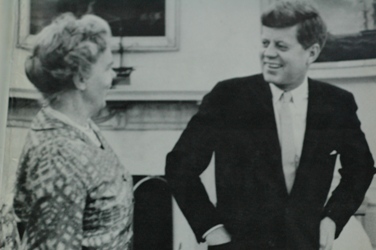

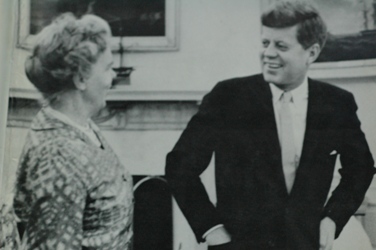 Dr. Travell with President Kennedy in the White House